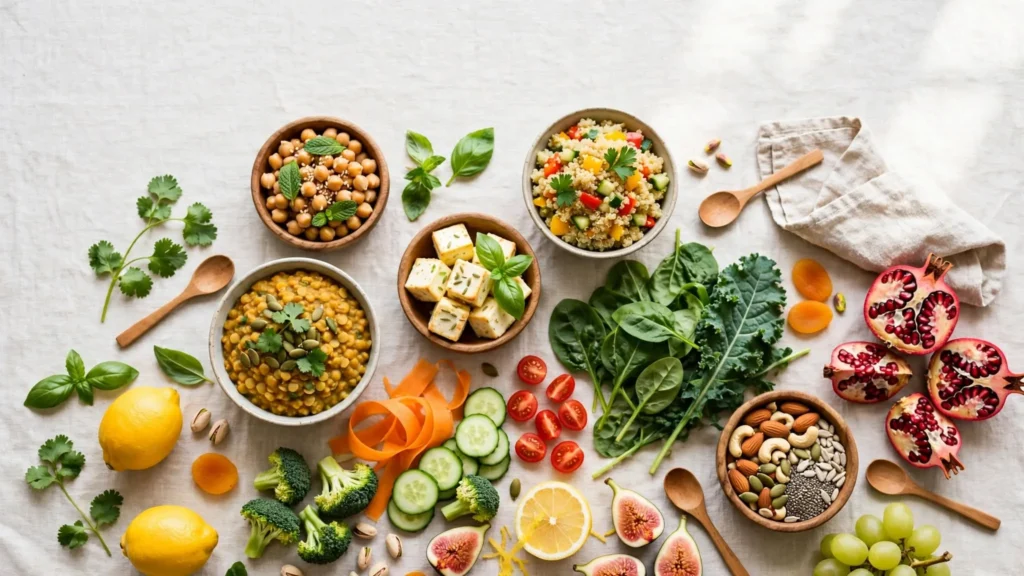
When I tell people that my approach is rooted in plant-forward nutrition, I often see a slight look of worry. Does it mean no more paneer? Salads for dinner every night? Giving up the food your family has cooked for generations?
Not at all. Plant-forward eating simply means that plants – vegetables, fruits, whole grains, pulses, nuts and seeds – take centre stage on your plate. It is not about labelling foods as good or bad, and it is not a strict set of rules. It is a way of eating that puts nourishment first and fits into real life.
What plant-forward eating looks like on an Indian plate
The good news is that many of our traditional meals are already wonderfully plant-forward. A bowl of dal with rice or roti, a seasonal sabzi, a little curd and a fresh salad is a balanced, nourishing meal. Khichdi with vegetables, poha with peanuts and peas, chana with brown rice – these are everyday foods that can form the foundation of a healthy way of eating.
Where we often go wrong is not the food itself, but the balance: too little variety, too few vegetables, portions that don’t match our activity, or too many packaged snacks between meals. Plant-forward eating gently shifts that balance.
Why I believe in it
Whole, minimally processed plant foods bring fibre, a wide range of vitamins and minerals, and plenty of colour and flavour to your meals. Eating a variety of them helps you get closer to your nutritional needs without counting every calorie.
For many of the people I work with, a more plant-forward plate also means feeling fuller for longer, more comfortable digestion and steadier energy through the day. Everyone is different, which is why I always look at your routine, preferences and health information before suggesting changes.
Five simple ways to start this week
- Add before you take away. Instead of cutting foods out, add one extra vegetable to lunch and dinner. A handful of spinach in your dal or grated carrot in your roti dough is a good start.
- Make half your plate vegetables. Use a simple visual guide: half vegetables, a quarter whole grains, a quarter protein such as dal, chana, rajma, paneer or tofu.
- Rotate your grains. Try millets like ragi, jowar or bajra a few times a week alongside wheat and rice.
- Keep pulses on the menu every day. Moong, masoor, chana, rajma, lobia – each brings something different.
- Snack on whole foods. A fruit, a small handful of nuts, roasted chana or makhana instead of packaged snacks.
What about protein?
This is one of the most common questions I hear. A well-planned vegetarian diet can meet your protein needs, but it does need a little attention. Including a protein source at every meal – dal, curd, paneer, tofu, chana, sprouts, nuts and seeds – makes a real difference. If you have specific needs, for example during pregnancy or if you are very active, your plan should reflect that.
It is not all or nothing
You don’t have to change everything at once. In fact, I would gently encourage you not to. The changes that last are the small ones you can repeat on a busy Tuesday, when you are tired and the family is hungry. Consistency matters far more than perfection.
Start with one meal. Notice how you feel. Build from there.
A simple plant-forward day
Here is what a balanced, plant-forward day might look like. It is only an example, not a plan to copy: your own meals should reflect your routine, preferences and health needs.
- Early morning: a glass of warm water and a few soaked almonds.
- Breakfast: vegetable poha with peanuts, or a moong dal chilla with mint chutney.
- Mid-morning: a seasonal fruit.
- Lunch: two rotis or a small bowl of rice, dal, a seasonal sabzi, salad and a small bowl of curd.
- Evening: roasted chana or makhana with a cup of tea.
- Dinner: vegetable khichdi or a light dal with sautéed vegetables, eaten a little earlier in the evening.
Making it work for the whole family
One of the biggest worries I hear is “I can’t cook separate food for myself.” You don’t have to. Plant-forward eating usually means small adjustments to the family meal: an extra vegetable in the sabzi, a bigger bowl of salad on the table, a millet roti alongside the wheat ones, or a little less oil in the tadka. Everyone benefits, and nobody feels they are “on a diet”.
Children often follow what they see. When the adults at the table enjoy their vegetables and dal, it slowly becomes normal for everyone.
But isn’t it expensive or time-consuming?
It doesn’t have to be. Seasonal vegetables, local fruits, dals and whole grains are some of the most affordable foods in our markets. A little planning helps: soaking pulses the night before, chopping vegetables for two meals at once, or keeping roasted chana and nuts ready for snacks. None of this needs special ingredients or expensive “superfoods”.
Plant-forward eating is a lifelong way of nourishing yourself, not a short-term diet. If you’d like support that is planned around you, book a free discovery call or see my programs.