So many of the people I talk to mention their digestion almost in passing. “I feel bloated after lunch.” “Acidity at night is normal for me.” “I am never quite regular.” These things are common, but that doesn’t mean we should simply live with them.
Digestion is closely connected to how we feel every day: our energy, comfort and even our mood. And while some digestive problems need a doctor’s attention, many everyday discomforts respond well to small, steady changes in how, what and when we eat.
How you eat matters as much as what you eat
Eating in a rush, at your desk or in front of a screen often means eating too fast and not chewing well. Try to give at least one meal a day your full attention. Sit down, slow down and chew properly. It sounds simple, but it is one of the habits my clients notice the most.
Fibre, gradually
Fibre from vegetables, fruits, whole grains, pulses, nuts and seeds supports regular digestion. If your current diet is low in fibre, increase it gradually over a few weeks and drink enough water alongside it. A sudden jump can cause discomfort, which is why going slowly works better.
Traditional foods that many people enjoy
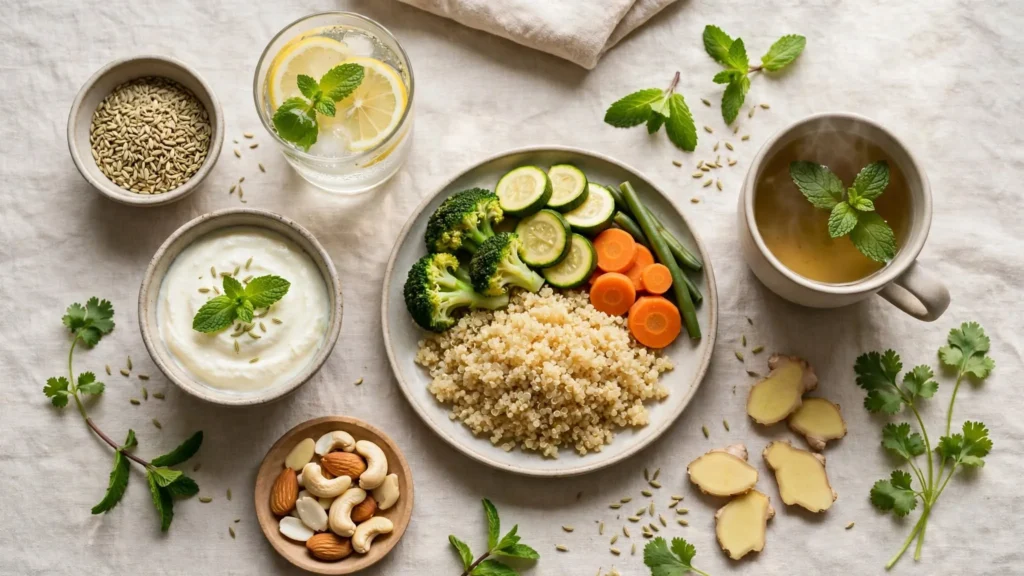
Our kitchens already have so much to offer. Homemade curd and buttermilk, simple khichdi, cooked vegetables, and spices like jeera, ajwain, saunf and ginger are part of many families’ everyday meals. Everyone tolerates foods differently, so notice what works for you rather than following a list.
Timing and routine
- Try to eat dinner a little earlier and keep it lighter than lunch.
- Leave a gap between your last meal and bedtime.
- Keep meal times fairly regular so your body knows what to expect.
- Take a short walk after meals when you can.
Water, sleep and stress
Digestion isn’t only about food. Drinking enough water through the day, getting good sleep and finding ways to manage stress all play a part. Many people notice their digestion changes during stressful weeks, even when their food stays the same.
When to see a doctor
Please speak to a doctor if you have ongoing pain, blood in your stool, unexplained weight loss, difficulty swallowing, or any symptom that worries you. Nutrition works best alongside medical care, never instead of it.
A gentle place to start
Pick one habit from this article for the next two weeks. Maybe it is chewing slowly at lunch, or an earlier dinner, or adding one vegetable to each meal. Write down how you feel. You may be surprised by how much small changes help.
A digestion-friendly day
Here is an example of a gentle, digestion-friendly day. Everyone is different, so use it as inspiration rather than a rule.
- Morning: a glass of warm water, then a cooked breakfast such as vegetable daliya or poha.
- Mid-morning: a seasonal fruit, eaten on its own.
- Lunch: dal, rice or roti, a cooked vegetable and a small bowl of curd or a glass of buttermilk.
- Evening: a light snack and a short walk.
- Dinner: something simple and warm, like khichdi or a vegetable soup, a couple of hours before bed.
Keep a simple food and comfort diary
If certain meals seem to leave you uncomfortable, write down what you ate, when, and how you felt afterwards for one or two weeks. Note your sleep and stress too. Patterns often appear that you wouldn’t notice otherwise: perhaps late dinners, eating very fast, or one particular food. This kind of diary is also very helpful to share with your nutritionist or doctor.
Be patient with your gut
Digestion usually responds to consistency rather than quick fixes. A new habit may take a few weeks to show its effect, so give each change time before deciding whether it works for you. And please be careful with trends that promise to “reset” or “detox” your gut in a few days. Your body already has its own systems for that; steady, nourishing habits support them best.
Water and fibre work together
Fibre helps most when it has enough fluid to work with. If you are adding more vegetables, fruit, whole grains and pulses to your meals, try to sip water regularly through the day rather than drinking a lot at once. Buttermilk, clear soups and plain water all count. A simple way to check is to notice how often you feel thirsty and how your energy feels in the afternoon. In my programs, clients log their average daily water once a week, which makes it easy to spot when it slips.
Above all, remember that your gut is unique. What suits your friend or a social media trend may not suit you, and that is perfectly fine.
Understanding the connection between your food, digestion and overall well-being is one of the areas I enjoy most. If you’d like support that is planned around you, book a free discovery call or see my programs.